In short
A pop, immediate swelling and a knee that gives way. ACL tears are common in cutting and pivoting sports — but not every torn ACL needs an operation.
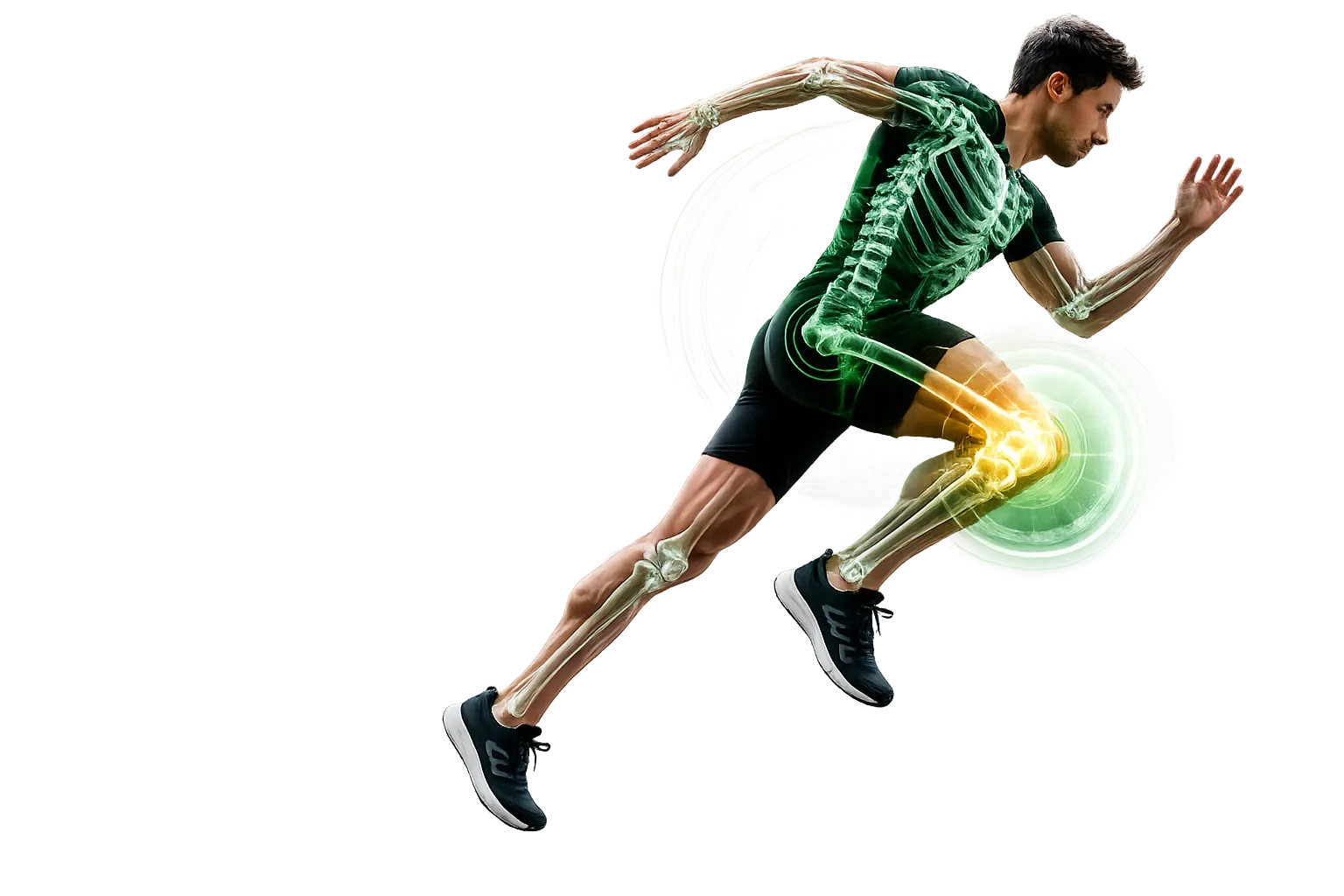
The anterior cruciate ligament runs diagonally through the centre of the knee and stops the shin bone sliding forward and rotating excessively on the thigh bone. It is the ligament most commonly injured in sport, usually without any contact at all.
How it typically happens
Most ACL tears occur on landing from a jump, decelerating suddenly, or changing direction with the foot planted. Football, basketball, badminton and kabaddi account for many of the cases we see. Contact injuries do occur but are the minority.
Signs at the time of injury
- An audible or felt pop at the moment of injury
- Swelling within a few hours, which is a strong indicator of bleeding inside the joint
- A sense that the knee gave way or shifted
- Inability to continue playing
- Later, episodes of the knee giving way on turning or on uneven ground
How it is diagnosed
Clinical examination is highly reliable in experienced hands. Tests such as the Lachman and pivot shift assess how far the shin bone shifts forward. MRI confirms the tear and, just as importantly, shows associated damage to the meniscus, cartilage and other ligaments — which often influences the treatment plan more than the ACL tear itself.
Does every ACL tear need surgery?
No, and this is where honest counselling matters. Reconstruction is primarily an operation to restore stability, and the case for it depends on what you need your knee to do.
Surgery is usually recommended when
- You want to return to sports involving pivoting, cutting or jumping
- Your knee gives way during everyday activities despite rehabilitation
- There is a repairable meniscal tear that needs protecting
- Your work involves demanding physical activity on uneven ground
Rehabilitation alone may be enough when
- You mainly want to walk, cycle, swim and use a gym
- Your knee feels stable through daily activity after a proper rehabilitation programme
- You are willing to modify activity away from pivoting sport
Our sports medicine team assesses the whole knee, not just the ligament, and will discuss both paths openly with you.
Frequently asked questions
Can an ACL heal without surgery?+
A completely torn ACL does not heal back to its original strength on its own. However, some people function well without reconstruction through structured rehabilitation, particularly those not returning to pivoting sports.
How soon after the injury should surgery be done?+
Usually not immediately. Operating on a swollen, stiff knee increases the risk of post-operative stiffness. Most surgeons wait until swelling settles and movement returns, often three to six weeks, unless there is a locked knee from an associated meniscal tear.
Will I definitely get arthritis later?+
An ACL injury does raise long-term arthritis risk, largely because of the initial trauma and any associated meniscal or cartilage damage. Surgery reduces instability but does not eliminate that risk, so this should not be the sole reason to operate.
This article is general health information, not medical advice, and it cannot account for your individual circumstances. Please consult a qualified orthopedic specialist about your own symptoms before making treatment decisions.
All articles